Bsides Bangalore 2024

Bsides Bangalore

28 June 2024

Talk Slides

Talk Abstract

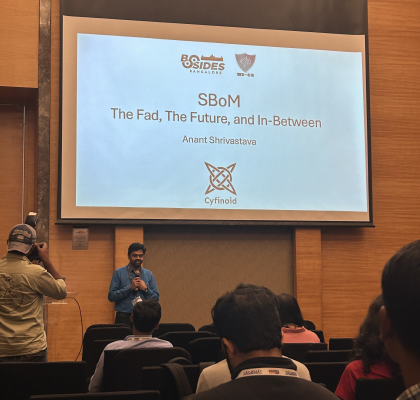
Software Bill of Materials (SBoM) has rapidly become a prominent topic in the security world over the past few months. From 2021 to 2024, the industry’s engagement with SBoMs raises critical questions: Are we fully leveraging their potential? Are efforts being made to create SBoMs in the first place? A frequent topic of debate is whether an SBoM should remain confidential or be shared—should it be protected, or openly accessible?

On one hand, SBoMs represent a revolutionary approach to maintaining software inventories, potentially simplifying the management of digital assets. However, there is a concern that the inclusion of infrastructure and additional elements complicates matters, transitioning from KBom, to Cbom, to Xbom. Is this merely an overenthusiastic expansion, or is there a genuine necessity for these variations?

Conversely, there are arguments that SBoMs represent an excessive investment with minimal returns, particularly when organizational strategies and codebases are subject to frequent changes, leading to uncertainties in their long-term utility.

Moreover, while SBoMs are typically discussed in the context of security, this presentation will explore other potential applications. By addressing these points, the presentation aims to clarify the current and future roles of SBoMs in the industry.

AI Generated Summary

AI Generated Content Disclaimer

Note: This summary is AI-generated and may contain inaccuracies, errors, or omissions. If you spot any issues, please contact the site owner for corrections. Errors or omissions are unintended.

This presentation at Bsides Bangalore examines the Software Bill of Materials (SBoM) landscape with a balanced, pragmatic lens — exploring whether SBoM is a passing compliance fad or a genuinely transformative capability for the IT industry. Anant Shrivastava walks through what SBoMs are, the competing standards, industry skepticism, practical security benefits, and crucially, how to make SBoMs valuable beyond security teams by positioning them as a cross-functional organizational asset for development, M&A, compliance, and risk management.

Key Topics Covered

SBoM Fundamentals:

Competing Standards:

SBoM Generation Tooling:

Industry Skepticism and Resistance:

Problems Created by the Software Industry:

SBoM’s Security Value:

Evolving Security Landscape — xBoMs and Beyond:

Existing Tooling Ecosystem:

SBoM Beyond Security — Cross-Functional Value:

Making SBoM Stick:

Actionable Takeaways

  1. Start generating SBoMs using tools like cdxgen, GitHub dependency graph, or SPDX tools — the generation problem is largely solved, but consumption remains the real challenge.
  2. Consolidate SBoMs across your organization into a unified inventory to draw cross-functional inferences rather than treating each SBoM in isolation.
  3. Position SBoM value beyond security by demonstrating its utility for development (technical debt tracking), M&A due diligence, compliance (license enforcement), and risk management.
  4. Address industry resistance head-on by framing SBoM as an inventory enabler — the same data serves security, legal, finance, and engineering needs.
  5. Invest in better UX for SBoM tooling — current tools are built by practitioners for practitioners, limiting adoption by the broader organization.
  6. Use SBoM data to make quantifiable, dollar-value arguments: cost of upgrading vs. not upgrading, licensing rework costs, and risk assessment for vendor software procurement.
  7. Explore the emerging xBoM ecosystem (VEX, SaaSBOM, HBOM, ML-BOM) and attestation frameworks to stay ahead as the compliance landscape evolves.